A draft “ Can I draw a tree who is also a neighbour?“ Essay
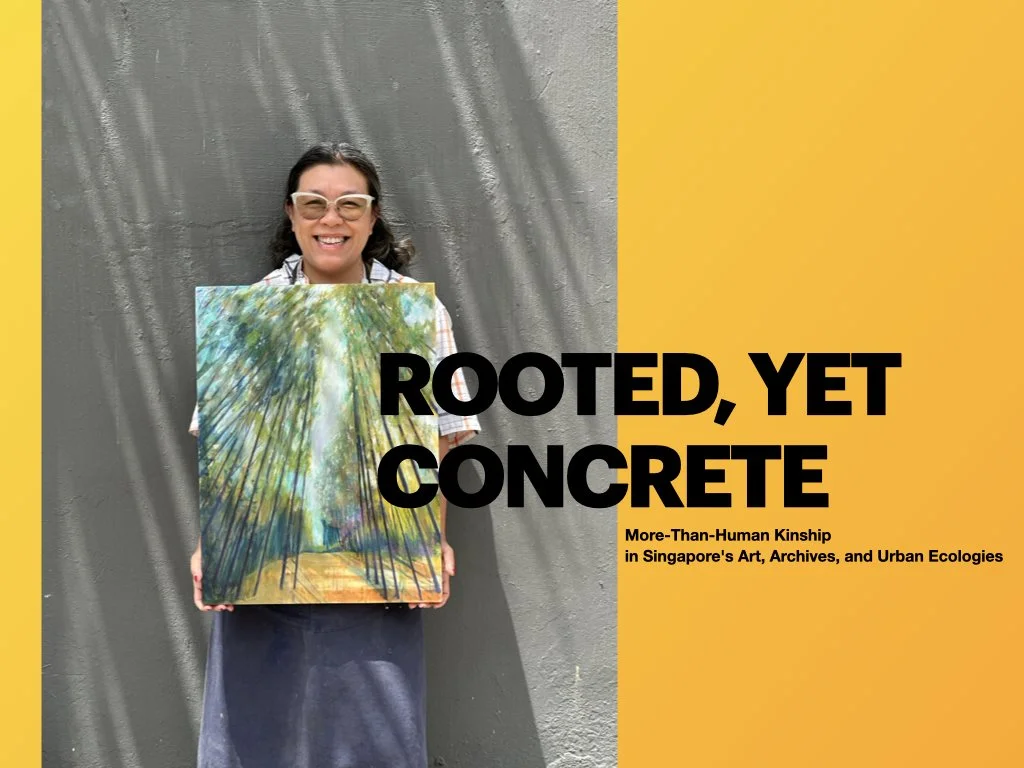
A Tree Who Is Also a Neighbour- Thesis
A Study of Nature, Dissonance, and Belonging in Contemporary Singaporean Art Practice, a short thesis ( a chapter of a bigger paper with a working title “Re-rooting the Singaporean art education; text that will accompany my series of artworks on dissonance, boundaries and diversity)
This thesisb examines the work of Singaporean women artists Donna Ong, and Zen Teh — each of whom positions nature as central to their practice — in dialogue with my own evolving work at Olij Studio over the past three to five years.
The central question is deceptively simple: can I draw a tree who is also a neighbour? It probes the complexity beneath Singapore’s curated, manicured green — a landscape that mirrors the country’s managed multiculturalism — and asks what it means to truly belong to a place you have chosen, or been chosen by.
As a new Singaporean of mixed heritage and education, (Indonesian, Chinese, Dutch, growing up in the 90’s educated by American and British TV), and traveling across multiple cultures and continents, I occupy a position of an active multi cultured observer, a place more and more people are in as we travel more widely. This thesis uses that vantage point to interrogate how Western art historical frameworks sit — often uneasily — when applied to a complex and nuanced Southeast Asian and Global South artistic contexts.
What emerges across all four practices is a persistent dissonance: a sophisticated, globally fluent visual language in tension with Singapore’s fast-moving, capitalist, consumerist reality that has no time to look at art let alone grow into a thriving art ecosystem. In Singapore, nature becomes more than a lush garden enviable by our neighbours but a charged environment of identity, belonging, and quiet resistance.
My own practice responds by holding that tension deliberately like a polyamorous relationship— offering both the dissonance through paintings the unexpected in familiar spaces and then the respite, through painting on location, growing a sketchers community who evolve creativity together, and slowing down therapeutic art as acts of re-rooting, a quiet resistance to the fast paced perfectly polished, marketable merchandise mentality.
A draft of my script for The Artist Village- Art History Klub (Presented at NLB on 5 June 2026)
My name is Susan, my last name is OLIJ, and no one can pronounce it, and I am an artist.
My presentation today will be very narrow and specifically covering a selection of works by artists born in the 70s and 80’s. Donna Ong & Zen Teh, and in conversation with my own art practice in Olij Studio, the past 3-5 years, evolving from the past 20 where I was teaching half of that time in LaSalle College of the Arts in different capacities, from essay supervision to illustrations and then switching to short course in sketchbook practice after the pandemic.
Subject of thesis: A tree whos also a neighbour, looks into Singaporean women artists who use nature as subject matter of their whole body of work, they seem familiar yet when I look in deeper, there’s a kind of indifferent and tensions and a dissonance.
Lets begin.
Interest and comparative analysis between the concept of art, taken from the western canons and applied to the South East Asian, and Global South diasporaic conversations.
Most recently, I make art about diversity, and belonging keeps coming back even when I am not focusing on identity, the topic of identity comes back in the context of ‘diversity’, I noticed a fragmented and conflicted home feeling, and a sense of belonging becomes a temporal feeling, where it constantly shifts. As a new Singaporean, I had to give up my Indonesian passport. I didn’t grow up in Singapore, i was educated in a mixed culture household, and also educated by European and American TV, and design studies in the UK and New York, I was always a global citizen as a child because of my mixed parentage upbringing, which adds another layer to my presentation.
We will not be looking at pioneering artists like Han Sai Por or Kumari Nahappan’s take on nature, even tho their work is strongly commenting on the nature related to Singapore. In this presentation, we are looking at Donna Ong, and Zen Teh.
My research rabbit hole goes beyond visual artists, looking at the intersections of all kinds of expressions unrelated to the forest, Singaporeans identities that doesn’t feel they fit in, such as comedian Fakkah Fuzz, (Fadzri Rashid), who tries to globalised his comedic voice, in some ways exaggerating his own life experiences for the purpose of making people laugh.
I use the word dissonance to define a lack of resonance, as if the sound you’re hearing is always a little off, but not off enough to do something about it. We get used to the tension.
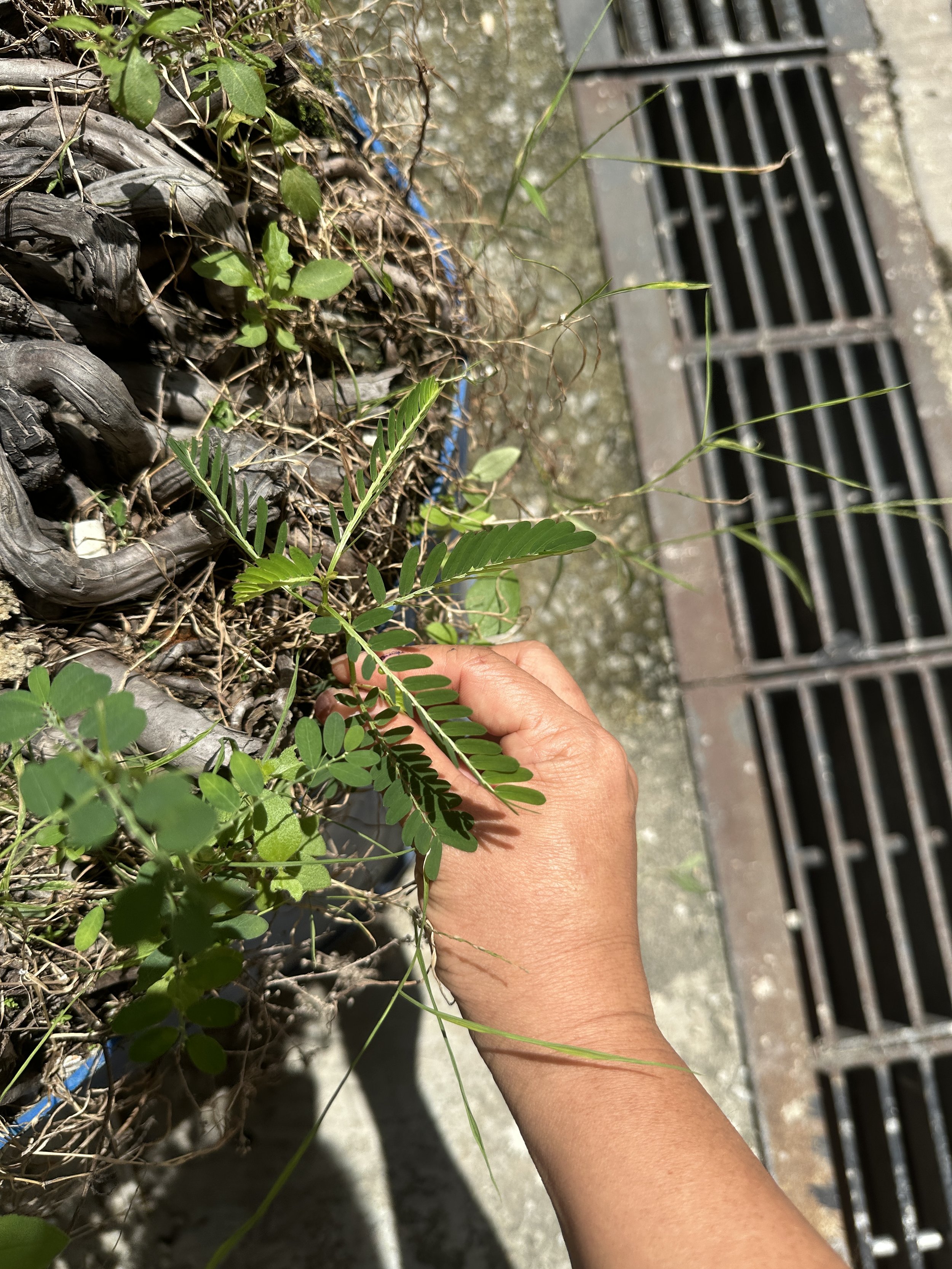
My own practice use the approach of drawing and painting on location around singapore, as a form of not just documentation but a relationship, and the nature elements cannot be ignored, it is manicured, curated green, and I like to hear all the diverse interpretation of Singapore, through the diverse lenses of Singaporean, and like the varieties of plants and trees in Singapore, there’s few to none that are homogenous plant in sight, there’s a variety, hundreds of them all crammed in a small space. A great metaphor for Singaporean in their HDB flats.
Lee Kuan Yew on requesting ‘palms’ to be planted nearest to the airport, as a tropical semiotic symbols of ‘different’ from the other neighbouring countries.
It feels appropriate to use manicured parks and nature as a metaphor for Singaporeans and the cultural diversity that tensely exists.
Why I did this presentation is one way I try to ‘understand’ my new country, in a wider context than just as a new citizen. SO as I posit in the beginning, this question of ‘ can I draw a tree who is also a neighbor?” I am referring to the complex multi-culture nature of Singaporean identity, and by researching just a few well known artists whose subject is nature, I was able to really look at the mindsets, the concerns. It brings me to other varieties of rabbit roles.
What I find is there’s one theme running through their work, that is that there’s a dissonance between what is real, and what is imagined, what is here versus what is elsewhere (in Donna Ong’s case its in children’s books, in Zen Teh’s case it’s ..... And in Charlotte Chin’ it is the westernised painting canons.)
I observe a sophisticated, globalised visual language in all their work, yet the undeniably small, fast moving, capitalistic and consumerist undergrowth resulted in a dissonance to these artists works in the context of every day Singaporean. I am interested to capture more and more of these dissonance in my own practice.
And this is how I choose to do it, while my paintings tries to capture the dissonance, the tension must be relieved, in a “slow down and smell the flowers sometimes’ forest bathing mindset. I am offering in my body of work, tension relief and a respite with a series of art play retreat, community art jams, artist dinners, slow art collaborations, mainly using the simple act of presence through drawing and painting.
So can I draw a tree that is also a neighbour? Is there a space where art can live within the ecosystem in Singapore, whether you are able to draw or not, is not even the point, if we do a “TEST”; the environment is ‘ready’, the Stimulus is lacking, the tools and time are all available.
I am asking the questions whether there is a place for more slow art making to create more presence, and that creates more headspaces as a tension relief for more Singaporean. Creativity in the centre of this practice as well as to be out more in nature, notice….