30 Years of Practicing Life Drawing: A Fun Meandering Story
How plein air painting became a practice that feels more meaningful—and over time easier than using image references, even my own photographs—came from decades of life drawing practice. Let me elaborate.
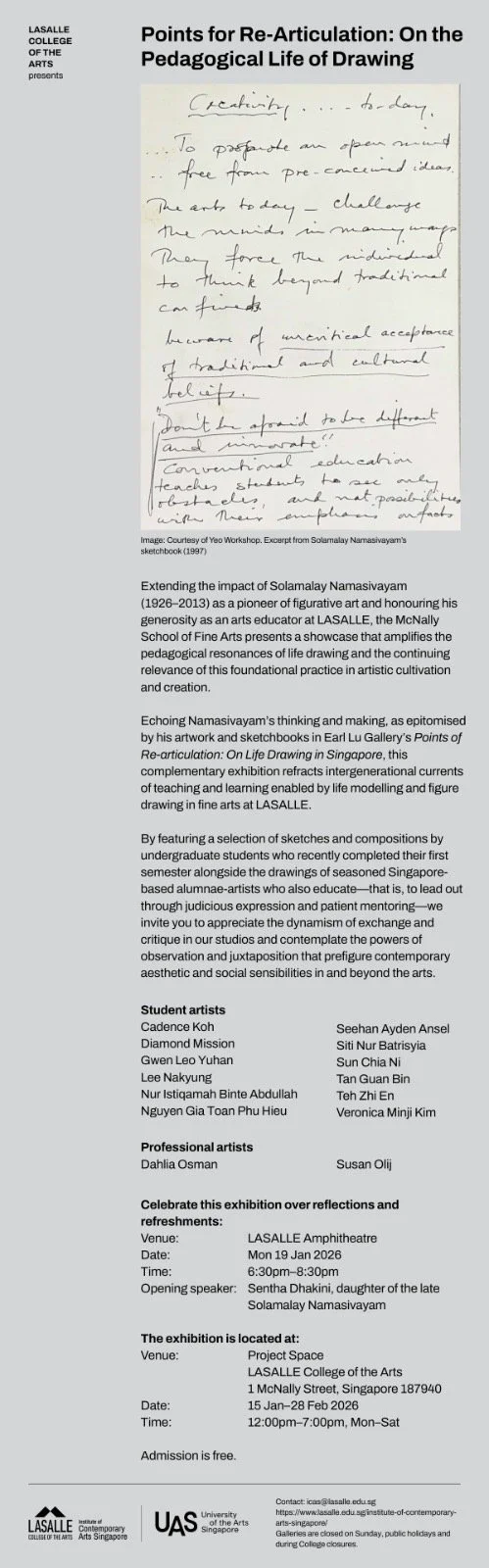
My first life drawing class was in 1994 at university, where I was studying fashion design. The campus was on a hill in Rochester, Kent. My teacher was a fashion illustrator—I wish you could've seen her, and I wish I could remember her name. She looked like an elf: tall, with bleach-blonde hair, wearing dark, long robe-like clothes with hints of leather and very worn knee-high boots. She would sit and demonstrate on the donkey bench—an L-shaped drawing bench you straddle while leaning your drawing board at an angle.
Her lines were active and fluid, and she had many considered pauses between just one dot. I don't remember what she said, but I remember how she made me feel: awe.
Then I would go back to my donkey bench, try to look at the model, and I couldn't see how I would even begin. It was overwhelming. I was 21, away from home for the first time in a strange land where everything was fascinating and new. I remember the classroom was in a basement with no windows.
1996: I was living in New York City, commuting an hour each way to life drawing practice at the New York Academy of Art, where every Saturday they held a three-hour open session for free. I remember always sitting next to a young Filipino guy who came every week. I'd think, "How long will it take me to draw like him?" and "I am never going to draw like that!"
And yet, like clockwork, I kept going to life drawing sessions—even when there were gaps of absence. I wasn't “obsessed” in the lingua franca of today; I was just determined, curious and interested in getting my head around this thing call drawing the figure. And even when I didn't have any guarantee I ever would.
I owe my professional life as an artist today to these three life drawing teachers, what I learn from them collectively are ways to ‘use my inner eyes to remember, to think laterally, and to trust my measurements’.
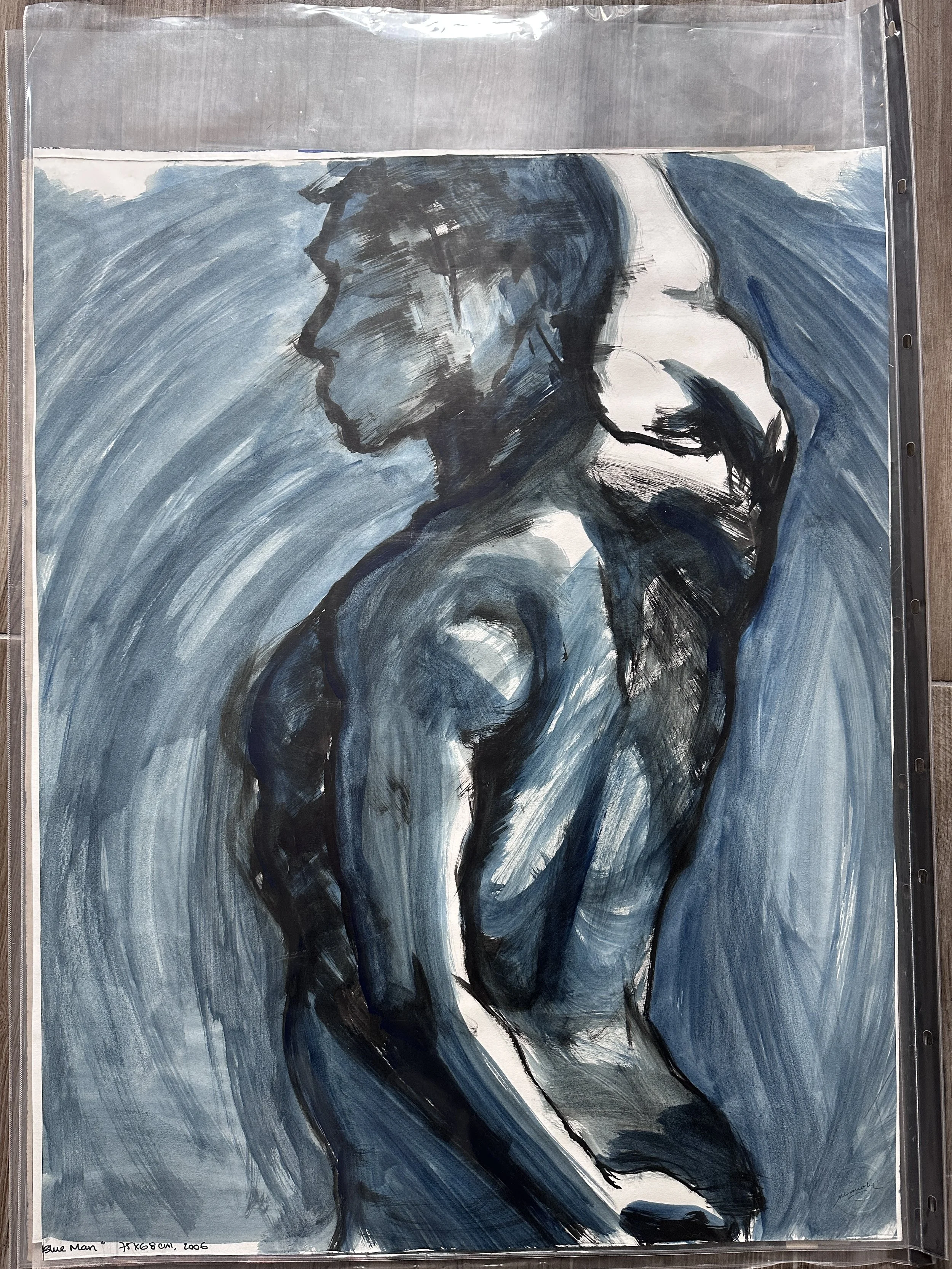
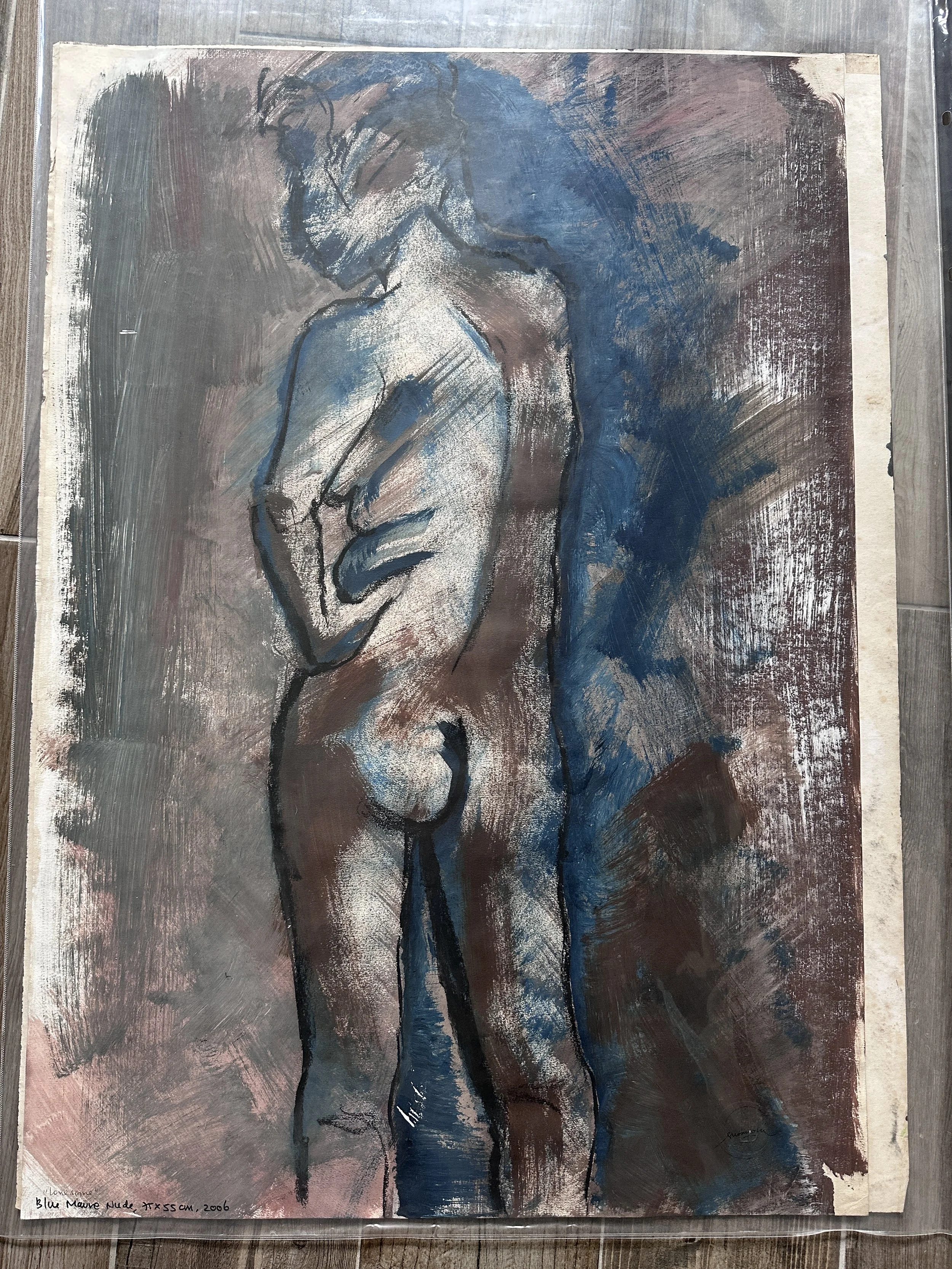
2005: I was living in Singapore, learning to draw human figures from Mr. Nama, who taught classes occasionally at LASALLE College of the Arts. He was famous for unconventional teaching. In one session, we were all told to draw the negative space of a pile of chairs stacked like a mountain in the middle of the room. He was intense, unrelenting, and so passionate. I recalled him telling us to look around us in our every day life and how architectures are all based on the contour and structure of the human body. More on this later.
I also took life drawing classes from Teguh Ostenrik, my second teacher, an Indonesian artist and unconventional teacher. I used to feel so frustrated when the instruction was to draw from one side of the room while looking at the model from another side, forcing us to remember what we saw. He used to say, look 90% of the time, draw 10%, don’t draw too fast because our brain will consistently try to fool us into believing what we don’t see.
My final teacher was James Holdsworth, who also ran an artist studio. He told me to always trust my angle and measurement—that's the one thing that will never fail. It was only decades later, when I was teaching my own life drawing classes at LASALLE, that I understood what he meant.
2018: I started travel sketching. I changed countries every month, and with so much scenery change, I wanted to capture it all. My first sketchbook was full of drawings of people—that was what I felt comfortable with and what I saw most as we transited from place to place during long hours in airports, trains, and bus stations. I remember thinking I could take photos of people, but that would be rude without their knowledge or consent. So I decided to just draw what I saw, and when they moved, I moved on. I didn't have to finish any of the drawings. Some pages were filled with disembodied heads.
From 2011-2018, I’ve taught life drawing short courses at LASALLE and numerous "how to draw people" workshops within the Fashion Design School. I also ran my own weekly life drawing sessions, hosted by artists and friends with a veranda, or a penthouse roof garden, and I’ve even use my own balcony, it was a large balcony facing nothing but a body of water, in the Golden Mile Complex.
My dream is to own my own studio someday—a studio as big as the one in Life Drawing Barcelona, with a cozy place for artists and students to hang out over wine or coffee, training for life drawing models to hold poses, fair wages for models, and regular access to draw from life. In the meantime, I drop into life drawing studios around the world when I travel. My favorite places are London, Barcelona, and Florence.
In early 2025, I showed three of my life drawing works in a group exhibition from February 28th to March 1st at Selegie Art Centre. Thanks to my organizer friends and life drawing artists Jess and Damien—without them, there would not be a show.
January 2026; Damien passed away in May 2025 after battling cancer. It was a loss—the life drawing community lost one of its most consistent and dedicated facilitators. Jess has taken on the responsibility on her own since then.
A major retrospective of Mr. Nama's body of work is currently showing at Earl Lu Gallery in LASALLE College of the Arts, and I'm honored to be part of the accompanying exhibition titled Points of Re-articulation: On the Pedagogical Life of Drawing, as part of Singapore Art Week. I'm showing one of my life drawings from 2009 that's very much influenced by Mr. Nama's style, alongside a smaller, newer piece from last year's exhibition.
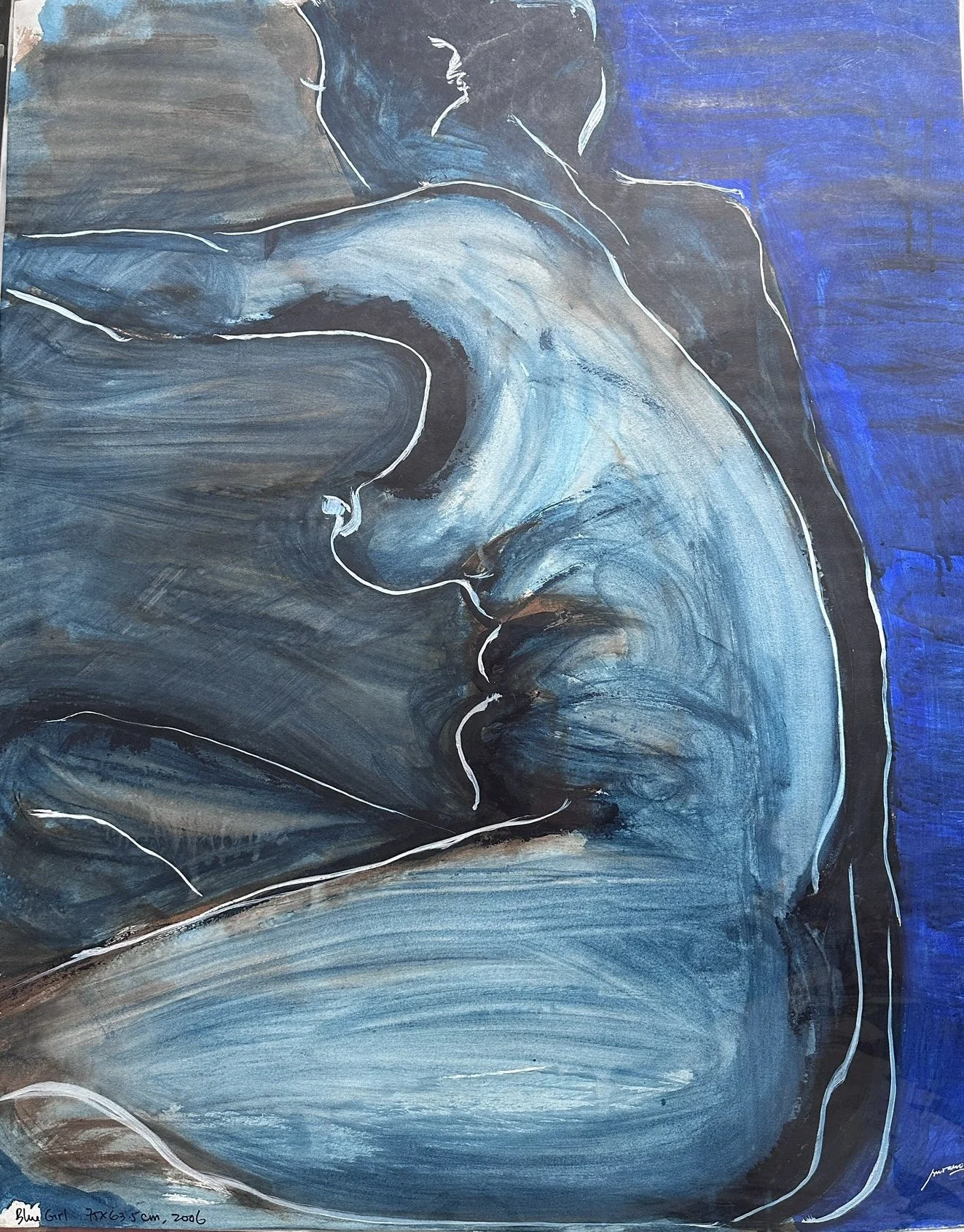
Blue girl
2009
75 x 58 cm
Mixed media on paper
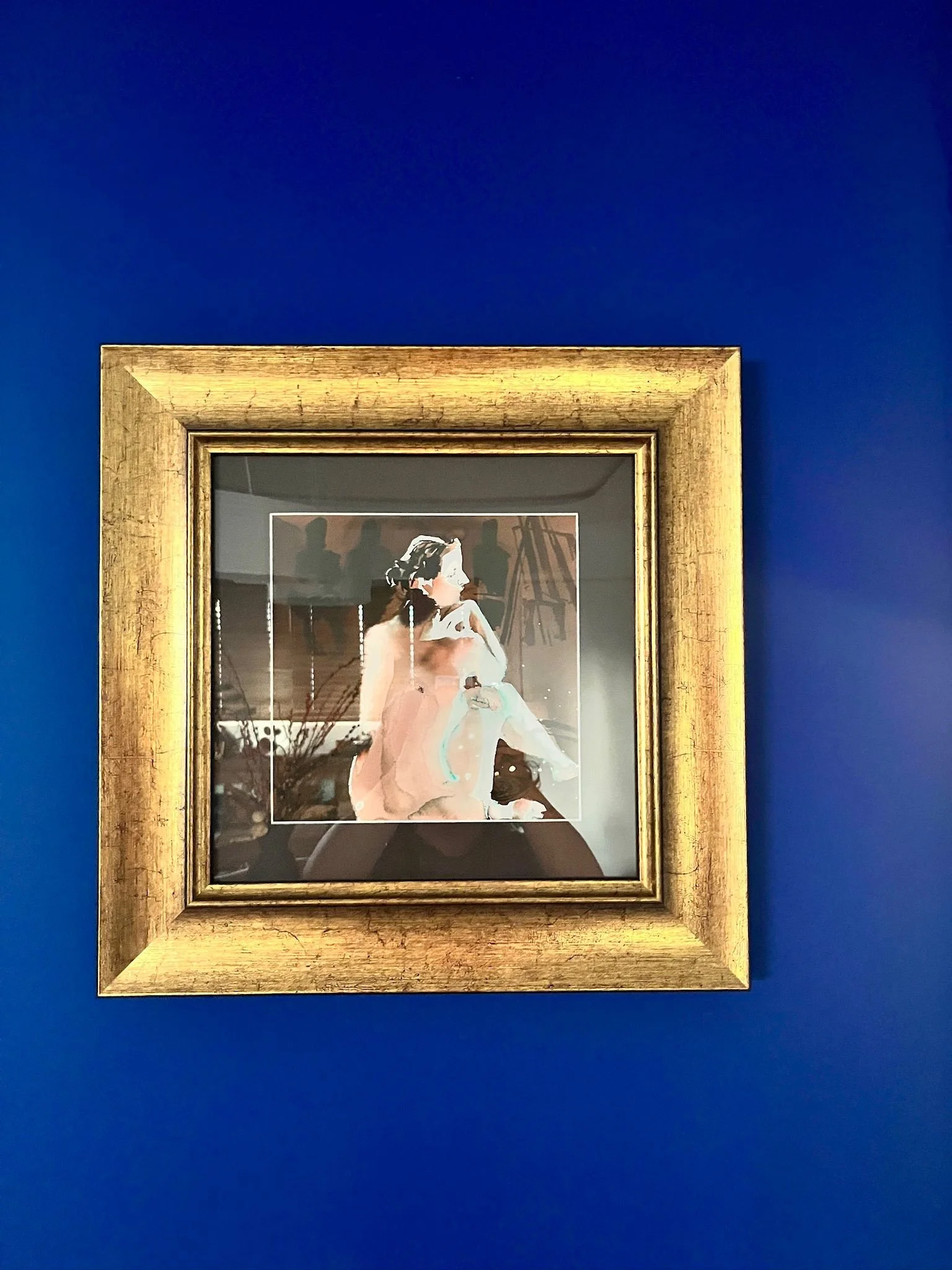
Anastasia
2023
47 x 57 cm
Ink on paper (artwork includes gold frame)
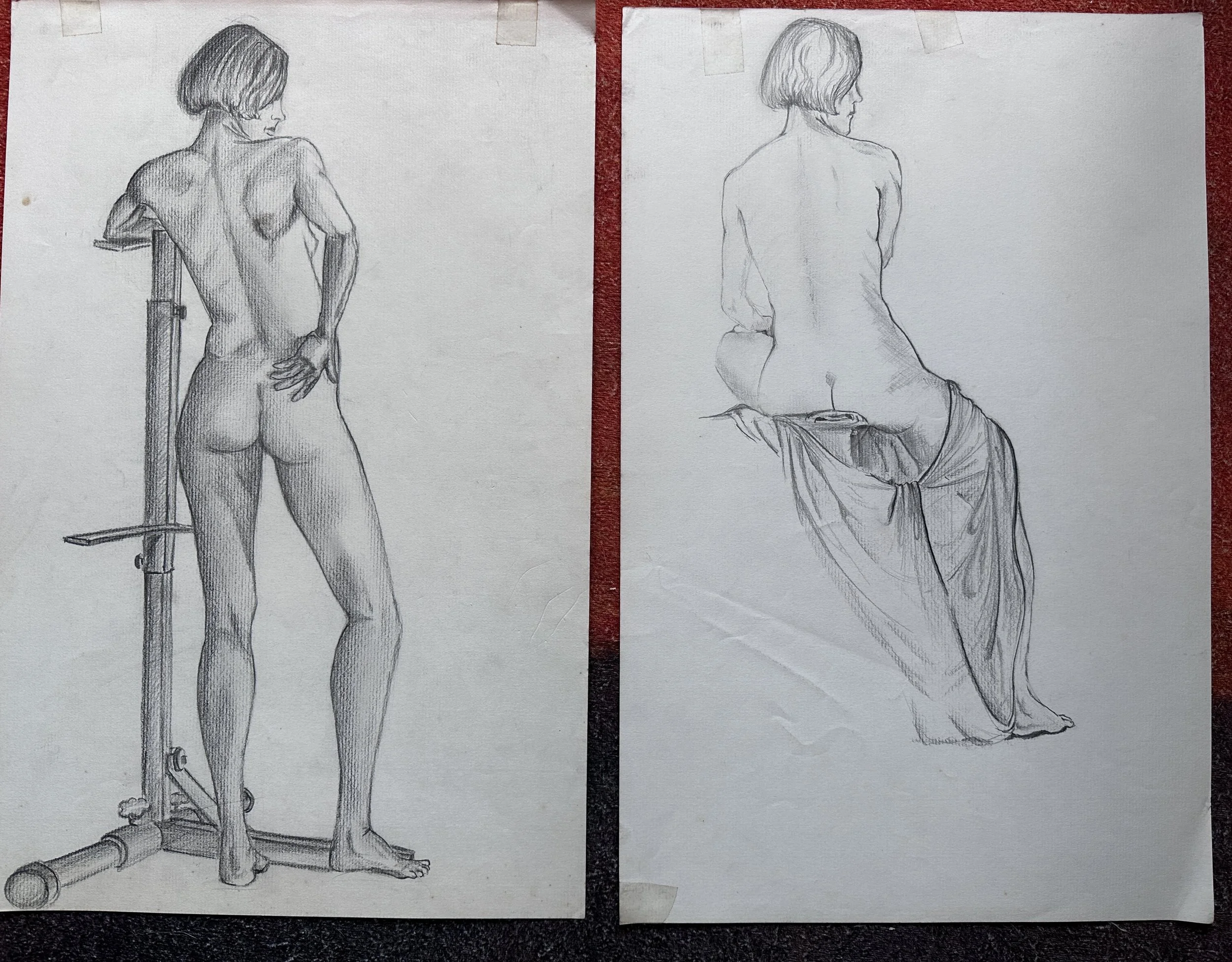
Life drawing sketches from my time in New York, circa 1999
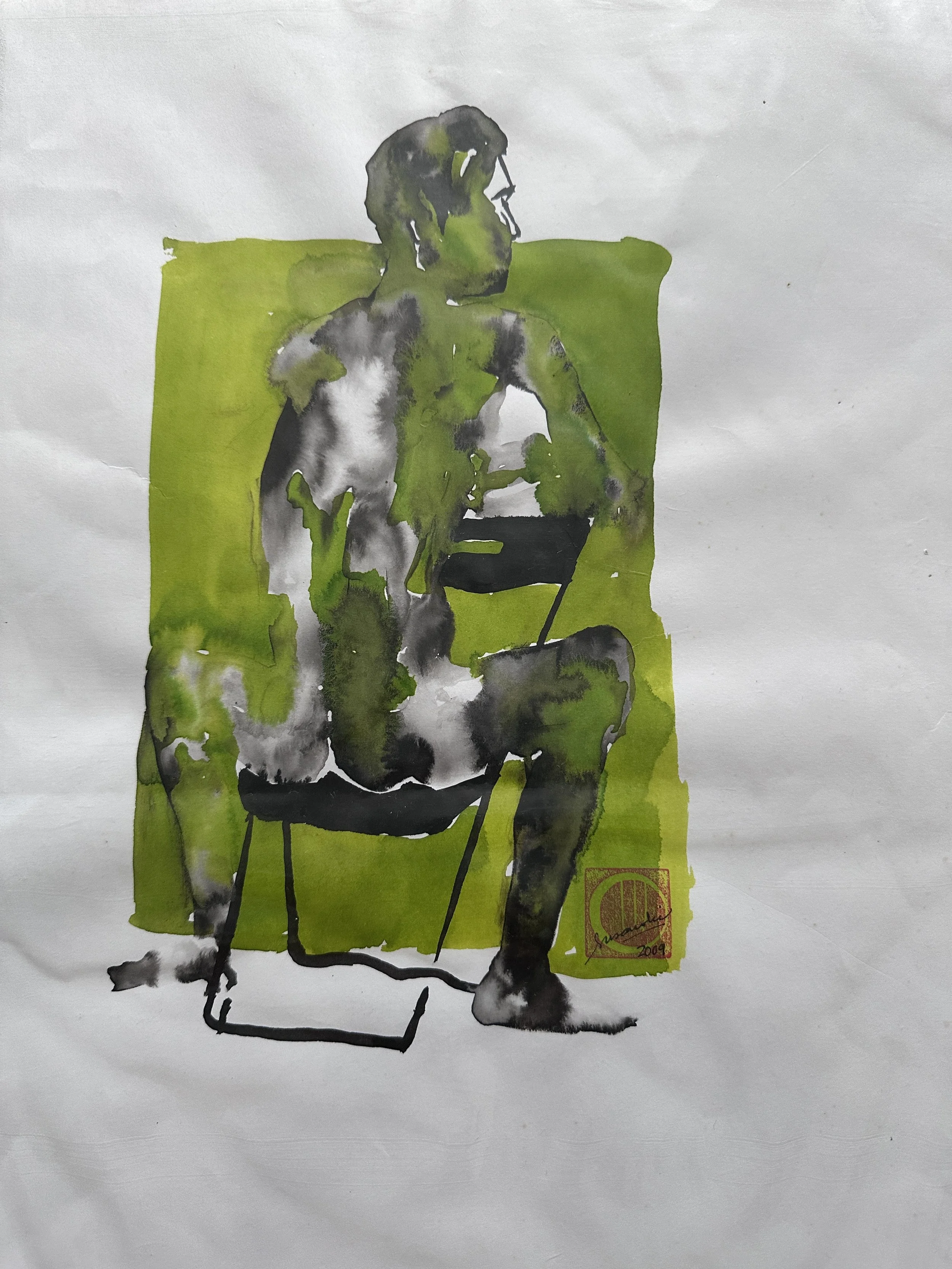
My other life drawing experiments, where I use inks. This is a style that I still use today, and I have evolved it since 2009.
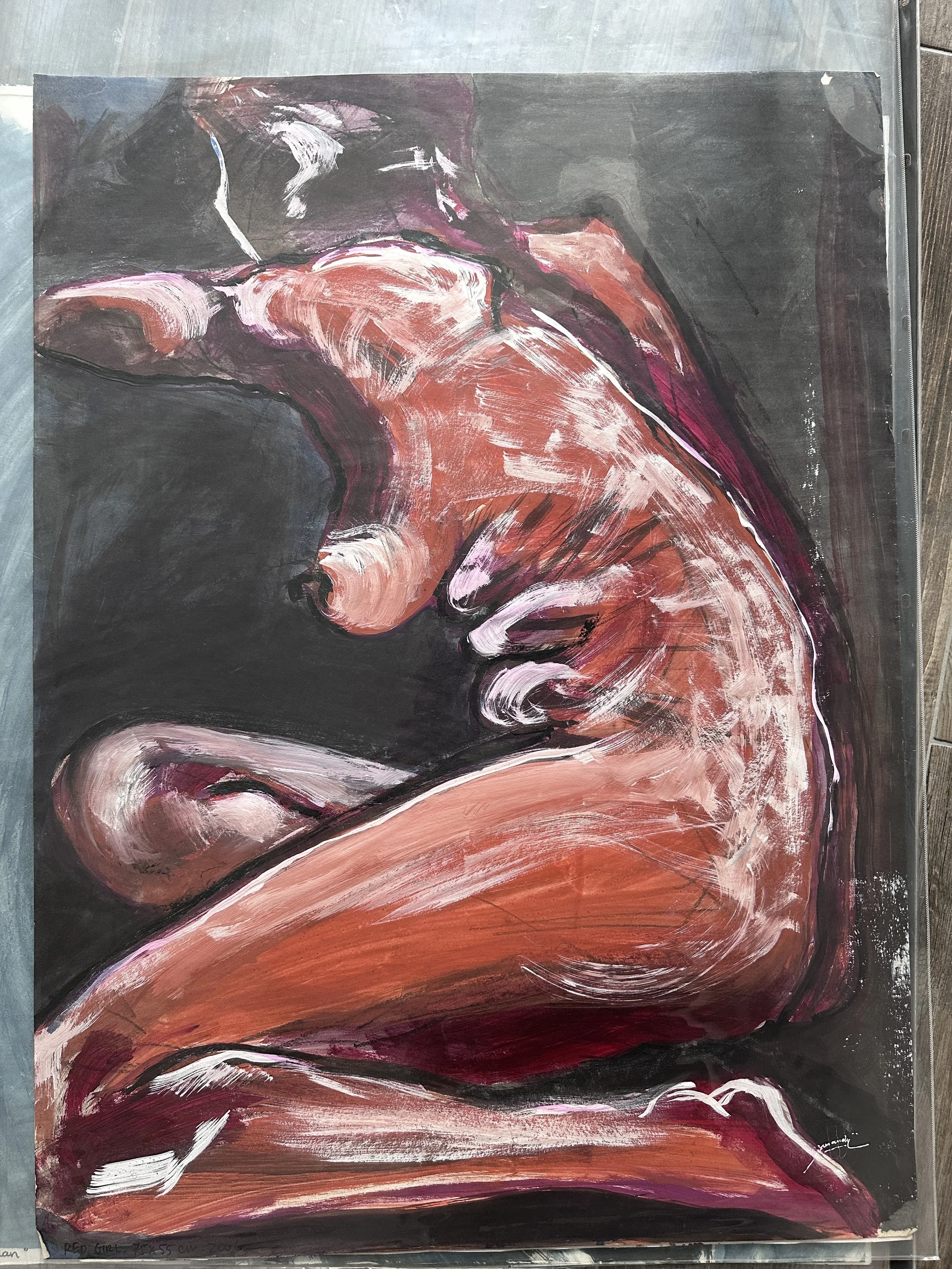
More works from my time in Mr Nama’s classes. Acrylic on paper. Circa 2009